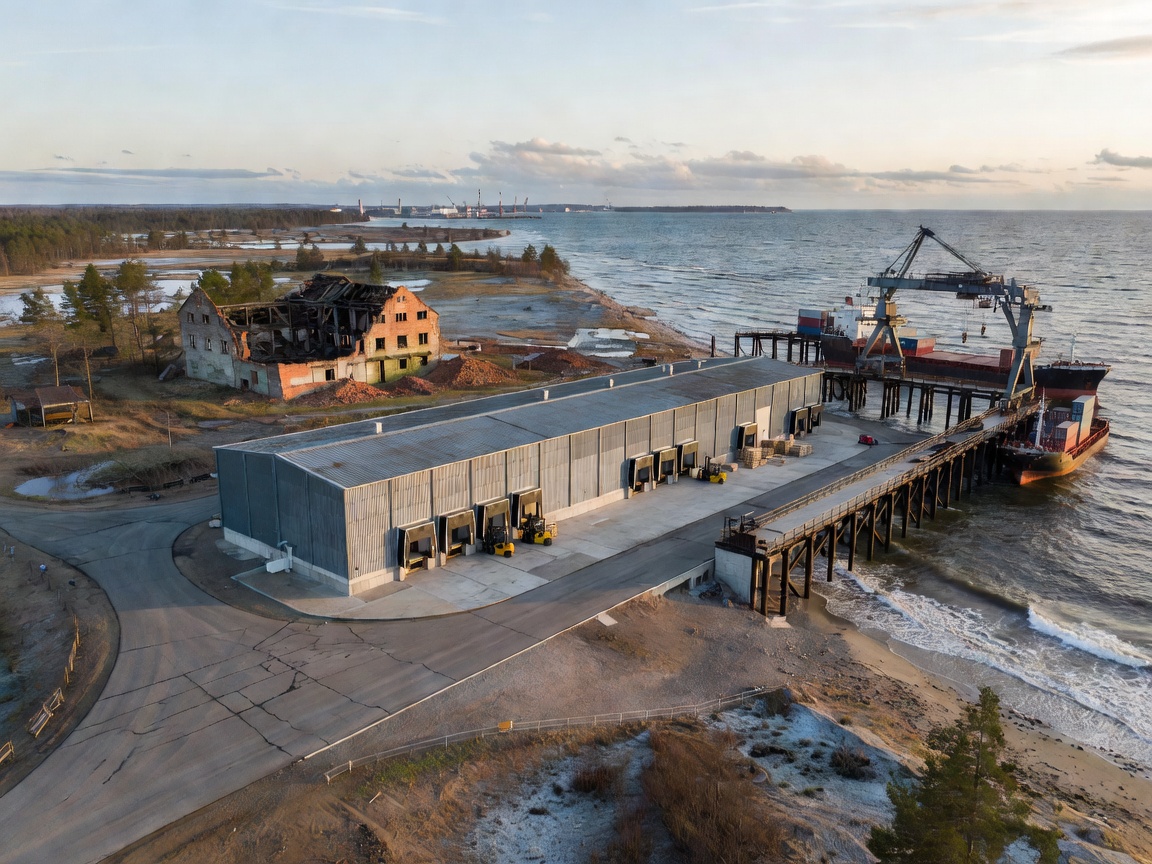
A warehouse location is part of the operating plan. It affects inbound handover, outbound reach, labour access and the amount of time or coordination needed between logistics nodes. The right comparison starts with cargo origin and destination—not a city ranking.
Three national contexts, several types of location
Estonia, Latvia and Lithuania each combine urban demand, industrial areas, port connections and inland routes. Tallinn is a useful geographic reference in Estonia; Riga in Latvia; and Vilnius and Kaunas in Lithuania. Klaipėda, Liepāja and Ventspils are coastal examples. Naming a city does not establish that a specific warehouse, service or transport connection is available there.
Capital-region locations may place inventory closer to concentrated customer, supplier or labour pools. They can also mean more competition for suitable premises, busier access roads or a longer journey to a different port or inland market. Conditions depend on the exact site and must be checked directly.
Port-adjacent areas can reduce the distance between maritime handling and storage. The trade-off may include dependence on port-side access arrangements, traffic patterns or a narrower fit with inland customer demand. An inland distribution area may offer a more central position for road-based deliveries, but add a separate leg between port or rail transfer and the warehouse.
Compare location by function
Capital-region logistics
Potential fit: operations serving urban demand, suppliers or a regional workforce.
Trade-off: check local access, land and building options, labour competition and travel time to freight gateways.
Port-adjacent areas
Potential fit: cargo with a clear maritime inbound or outbound leg.
Trade-off: consider inland delivery reach, terminal handovers, access rules and whether the maritime leg matches the operating plan.
Inland distribution zones
Potential fit: inventory serving more than one destination or a road-oriented distribution pattern.
Trade-off: assess distance to port and rail interfaces, local road capacity and the availability of suitable buildings.
Road, rail and gateway proximity
Road access usually matters for collection, replenishment and delivery legs. Check the approach to the site—not only a map distance to a main road. Vehicle restrictions, junctions, yard geometry and local traffic can change the practical connection.
Rail-connected logistics can support a transfer between rail and storage where the facility, terminal arrangement and cargo plan align. “Near rail” is not the same as having a usable rail siding or an available service. Confirm access, handling responsibility and transfer requirements with relevant operators.
Port proximity is most useful when the flow actually uses maritime freight. Consider the handover between port and warehouse, cargo release process, any intermediate transfer and how the goods move onward. Verify current arrangements with the port, carrier and warehouse operator.
Trade-offs to map before selecting a region
Start by plotting cargo origins, customer locations and required transfer points. Then compare port proximity, road access, rail access, labour availability, customer proximity and land or building availability. These factors can pull in different directions. A location closer to customers may be farther from a port; a site with attractive access may not provide the storage conditions or layout the goods require.
- Port proximity: Does it reduce a real handling or transport leg?
- Road access: Can expected vehicles reach and turn at the site?
- Rail access: Is the connection operationally usable, not merely nearby?
- Labour availability: Can the required roles be recruited within the operating area?
- Customer reach: Does the site support the planned delivery footprint?
- Building supply: Does a suitable facility exist with terms and conditions that can be confirmed?
Good for
Use this regional view when comparing possible country or area choices, planning a Baltic stock position, or deciding whether a port-side or inland model needs further investigation. It is useful before a facility shortlist; it is not a substitute for site due diligence.
What to check
- Ask the operator to confirm site address, access, storage conditions and present operating arrangements.
- Confirm current road, rail and port connections with the relevant carrier or infrastructure operator.
- Test likely cargo flows against customer locations, required handovers and delivery constraints.
- Review building suitability, labour assumptions and expansion options directly.
- Check current planning, customs or regulatory questions with competent authorities or advisers.
No warehouse counts, vacancy rates, prices or route availability are stated here because these require current verification.
Regional selection: advantages and limitations
A coastal location can shorten one leg but may not be the best position for inland distribution. A capital-region position can improve access to some customers or labour pools but may increase dependency on urban road access. Inland sites can support a broader catchment, though they may require an additional port or terminal transfer. There is no universal winner; score each option against the same cargo and service assumptions.
NEXT STEP / SITE REQUIREMENTS
Turn geography into a location brief.
List cargo, target markets and transfer needs before approaching an operator.