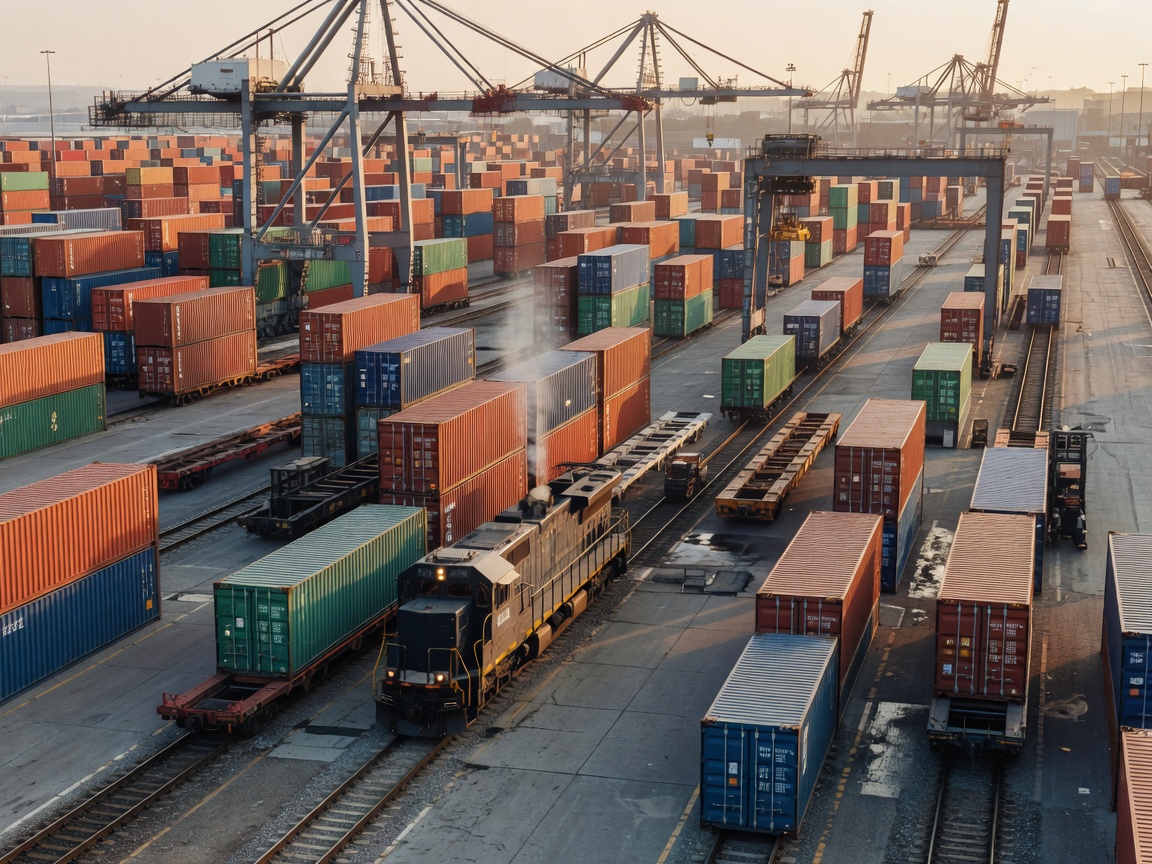
A warehouse is one node in a transport network. Strong location logic considers how freight arrives, how it is transferred, and how it leaves. A nearby road, port or railway is only useful when the required connection can be arranged and verified.
PORT → WAREHOUSE
Port-adjacent storage can support a direct relationship between maritime handling and warehousing. The route may involve a terminal release, collection, staging and a separate receiving appointment. Identify which party manages each handover and what information is needed before cargo moves.
Advantage: the warehouse can be positioned close to a maritime gateway, which may simplify one portion of a cargo plan. Limitation: port proximity does not guarantee immediate access, a particular service, or a shorter end-to-end delivery. Confirm terminal processes, access and current transport arrangements with the relevant parties.
RAIL → WAREHOUSE
Rail freight can connect an inland facility or transfer point with a wider freight network. An intermodal movement transfers cargo between modes, often using containers or other load units designed for the handover. Check whether the facility itself has a usable rail interface or whether cargo must move between a terminal and warehouse by road.
Advantage: rail can form a distinct line-haul leg where the network and cargo fit. Limitation: it depends on terminals, equipment, scheduling, origin-destination coverage and transfer arrangements. A map showing tracks nearby does not establish siding access, a suitable service or current capacity. Ask rail and terminal operators to confirm the details.
ROAD → WAREHOUSE
Road freight commonly connects the warehouse to suppliers, ports, rail terminals, customers and other distribution nodes. Assess the final approach as well as the wider road corridor. Turning space, vehicle access, time restrictions, yard management and loading arrangements can affect a site’s practical use.
Advantage: road legs can link points that do not have direct rail or port interfaces and can provide flexible collection patterns. Limitation: road transport depends on carrier arrangements, suitable vehicles, access constraints and changing conditions. Do not assume a road connection translates into a specific transit time, price or service availability.
WAREHOUSE → CUSTOMER
Outbound distribution begins with order readiness and a clear handover point. The warehouse may stage cargo for a carrier, consolidate multiple orders or transfer goods to another distribution node. Agree who books transport, who supplies shipment data, how exceptions are recorded and when responsibility transfers.
Customer proximity can matter for delivery planning, but so can shipment size, delivery locations, handling requirements and the structure of the distribution network. A central-looking location is not automatically optimal. Compare actual destinations and operating assumptions rather than relying on a single distance measure.
Multimodal links and consolidation
Multimodal transport combines two or more transport modes within a movement plan. Intermodal freight is a common arrangement for transferring a load unit between modes without handling the goods themselves at every transfer. Both approaches create handover points that need clear documents, equipment compatibility and responsibility allocation.
Cargo consolidation combines compatible shipments into a larger movement, while deconsolidation separates them closer to their destination. It can influence storage, sorting, staging and timing needs. Check whether consolidation changes cargo visibility, handling steps, packaging requirements or delivery sequence. A transfer point may be a warehouse, port terminal, rail terminal or another logistics facility.
Build a corridor view
Map an origin, each transfer point, the warehouse and final delivery locations. Add the mode used for each leg and identify the party accountable at each handover. Then note what must be confirmed: present route availability, booking process, cut-offs, equipment, cargo acceptance, documentation and contingency arrangements.
- Port-adjacent model: useful to investigate for maritime flows; verify port access and onward road or rail leg.
- Rail-linked model: useful where a suitable rail and terminal arrangement exists; verify transfer needs and service status.
- Road-led model: adaptable across many nodes; verify site access, carrier fit and changing operating conditions.
- Multimodal model: can combine distinct network strengths; requires deliberate coordination across handovers.
Good for
This guide supports early route design, warehouse location review and conversations with carriers or terminal operators. Use it to expose missing handovers before selecting a facility or mode combination.
What to check
- Ask carriers, ports and terminals to verify present connections, service conditions and booking requirements.
- Confirm vehicle and cargo access at the facility, including yard and loading arrangements.
- Identify who owns transfer, cargo records, damage reporting and exception escalation.
- Review any storage or staging needed between transport legs.
- Check customs, security and regulatory questions with the appropriate authority or qualified adviser.
Advantages and constraints
A single-mode route may have fewer transfers but narrower network reach. A multimodal plan may offer more combinations while adding coordination and interfaces. Consolidation can make a movement plan more efficient for compatible freight but may add sorting or dwell requirements. Compare the complete cargo chain and confirm current operating facts; no route should be assumed available from this reference.
NEXT STEP / ROUTE DESIGN
List every transfer point.
Make the route and handover responsibilities visible before booking movement.